In 2023, the generative AI was still an emerging technology, dominated by Chatgpt and Gemini of Google. Only 1 out of 100 business user accessed these tools. In 2025, this proportion increased considerably: almost one out of 20 user operated directly from Genai applications, while the majority benefit indirectly thanks to their integration into various professional solutions. Netskope has identified 317 separate Genai applications used by more than 3,500 of its customers, thus confirming the generalization of these tools in modern workflows.
Ray Canzanese, Netskope Threat Labs Director, underlines:
“”The most recent data show that generative AI is no longer a niche technology, but that it is omnipresent. It is increasingly integrated into all areas, whether dedicated applications or back-end integration. Such ubiquity represents an increasing challenge for cybersecurity. “
Increased risks for data security
This massive adoption is accompanied by significant risks. Companies see their confidential data potentially exposed to third -party applications that could operate it to cause new AI models. In addition, the generative AI feeds the Shadow IT: 72 % of the users of the Genai in a company access these tools from unsecured personal accounts, thus escaping the control of the IT departments.

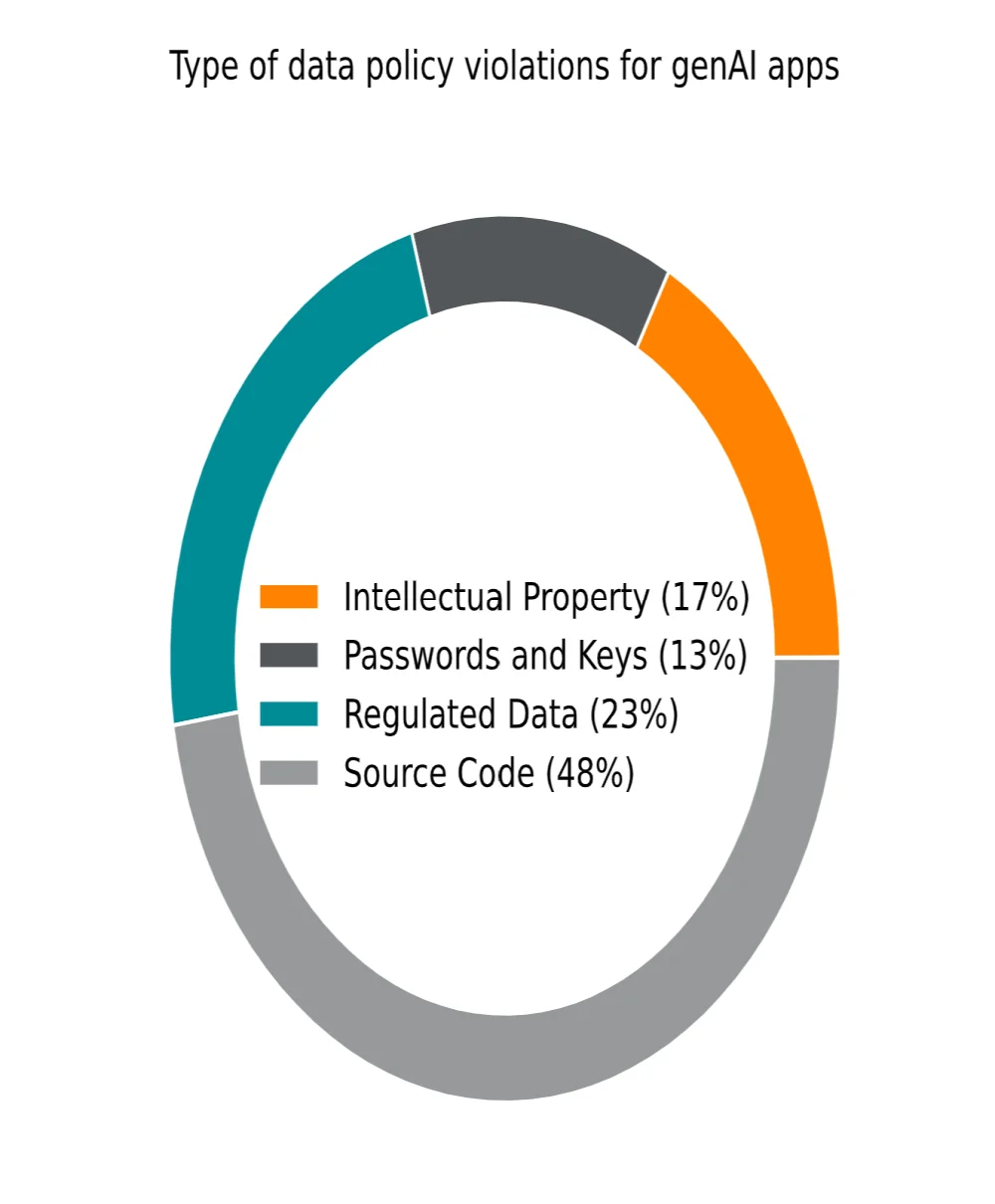
Netskope image credit
In parallel, the rise of AI infrastructure in local mode, which increased from less than 1 % to 54 % in one year, limits certain risks linked to the cloud but introduces new challenges, including internal data leaks within supply chains and vulnerabilities
James Robinson, Ciso de Netskope, comments:
“Despite the serious efforts made by companies to implement internal generative AI tools, our study shows that the Shadow IT has been replaced by a ghost AI, nearly three -quarters of the users continuing to access generative AI applications from their personal accounts. This continuous trend, associated with data that is shared, underlines the need to implement the safety means of the safety data, to allow teams Charge of safety and risk management to recover governance and visibility, two essential elements, as well as acceptable control of the way in which generative AI is used within their company. “
Risk reduction strategies
Faced with these threats, almost 100 % of companies strive to reduce the risks linked to AI. Among the measures adopted, Netskope reports:
-
The blocking and access restriction: Many organizations prefer to prohibit access to GENAI applications until an in -depth evaluation is carried out;
-
The prevention of data loss (DLP): surveillance and filtering solutions are set up to prevent the involuntary sharing of sensitive data with AI tools;
-
Coaching of real -time users: training and contextual alerts make it possible to raise awareness among employees at risk and to guide them towards best use practices.
Netskope’s recommendations
While cybercriminals exploit generative AI to develop increasingly sophisticated threats, companies must also evolve. As Ari Giguere, Vice-President of Netskope points out, an effective cybersecurity must combine human creativity and technological power to keep up with the pace of innovation. The adoption of specific executives and advanced security systems not only reduces risks, but also to take advantage of the many advantages that generative AI offers.
To protect data, users and networks, Netskope recommends setting up a structured approach:
-
Evaluate the generative AI landscape: Identify the Genai applications and infrastructure used, as well as their users and their uses;
-
Strengthen GENAI applications control: Authorize only validated applications, block those not approved and use data loss prevention technologies (DLP) to avoid any leak of sensitive information;
-
Optimize local controls : Apply reference frames such as the TOP 10 OWASP LLM applications, the IA risk management framework of the NIST and the Atlas Miter benchmark to guarantee effective protection of internal infrastructure.
::