Imagine a world where marketing is no longer just about sending generic emails, running broad advertisements, or hoping your customers find the right information on their own. Picture a future where every interaction with your brand feels tailored to the individual, where marketing is proactive rather than reactive, and where AI is seamlessly integrated into every stage of your customer journey. Welcome to the world of AI-driven SaaS marketing in 2025.
In just a few short years, AI will have transformed the way SaaS companies market their products and engage with customers. But what does this transformation look like? How can SaaS businesses tap into the full potential of AI to enhance their marketing efforts? What tools will they need to leverage, and what strategies will they need to adopt to stay competitive in a rapidly evolving market?
These are the questions that every SaaS marketer will be grappling with in 2025. And the answers are more exciting than you might think. As AI technologies advance, they are enabling SaaS companies to craft more personalized, data-driven marketing strategies that anticipate customer needs before they even arise. The days of generic mass-marketing campaigns are coming to an end, and in their place is a new era of marketing that is as intelligent as it is efficient.
Let’s take a deeper look at how AI will revolutionize SaaS marketing in 2025 and explore the strategies that will drive success for businesses in this new landscape.
How Can AI Drive Hyper-Personalization in SaaS Marketing?
Think about the last time you received an email from a brand that felt perfectly tailored to you. Maybe it was an offer for a product you had just looked at online, or a recommendation based on something you’d previously purchased. Did it catch your attention? Did you feel understood? Chances are, it did—because personalization works.
But in 2025, AI will take personalization to a level we can only begin to imagine today. SaaS marketers will be able to analyze not only what their customers are doing right now but also predict what they’re likely to do next. AI will use data points from past interactions, browsing habits, social media activity, and even physiological cues (thanks to advanced sensors and biometric tracking) to create incredibly personalized experiences for each user.
How will AI know exactly what content to recommend to each customer? How will it help SaaS companies craft the perfect messaging for each user at just the right moment? Will your customers feel more connected to your brand as a result of these personalized experiences?
Statistics:
- McKinsey reports that personalized marketing efforts can increase sales by 10-30%. With AI, this number will only rise as companies fine-tune their approach based on individual customer data.
- According to Accenture, 91% of consumers are more likely to shop with brands that offer personalized experiences. In the SaaS world, this will mean delivering content, demos, and even features that resonate with each user’s unique journey.
Can AI Automate Content Creation at Scale?
Now, imagine that instead of spending days crafting blog posts, social media updates, and landing pages, you could rely on AI to generate most of your content in a fraction of the time. Sounds like a dream, right? But it’s quickly becoming a reality.
AI tools like GPT-4 and other content generation models can analyze large amounts of data and produce coherent, contextually relevant content that aligns with your brand voice. Whether it’s blog articles, email copy, social media posts, or even video scripts, AI can create content at scale, without losing quality. And as these tools become more advanced, they’ll be able to match the tone and style that your audience expects, making the content feel as human as possible.
How will this change the way you approach content creation in 2025? What kinds of content can you automate, and what should still be handled by a human? Can AI really create engaging, emotional content that resonates with your target audience?
Statistics:
- Content Marketing Institute found that 70% of B2B marketers say content creation is their biggest challenge. With AI, the burden of content creation will shift dramatically, allowing marketers to scale their efforts while improving quality.
- A report by Wyzowl found that 86% of businesses now use video as a marketing tool, and AI can help create these assets faster and more affordably.
How Will AI Revolutionize Customer Engagement Through Chatbots and Virtual Assistants?
Imagine a potential customer visits your website, but instead of being greeted by a standard FAQ page or waiting for an email response, they’re immediately met by a chatbot that can answer questions, offer product recommendations, and even guide them through the onboarding process. Better yet, this isn’t just any chatbot—it’s powered by advanced AI, capable of handling complex queries, learning from every interaction, and even empathizing with the user’s tone and mood.
In 2025, AI-driven chatbots and virtual assistants will become integral to SaaS marketing strategies. They won’t just be answering basic questions—they’ll be engaging in meaningful conversations, helping with lead qualification, guiding users toward relevant product features, and closing deals.
How will these AI-driven assistants change the way SaaS companies interact with customers? Can they build meaningful relationships while still maintaining a high level of efficiency? Will customers feel more valued when they’re interacting with an AI that understands their needs?
Statistics:
- According to Statista, the global chatbot market is expected to reach $1.34 billion by 2025, underscoring the growing importance of AI-powered customer engagement.
- Gartner reports that by 2025, 75% of customer service interactions will be powered by AI chatbots, highlighting the growing trend toward automation in customer support.
What Role Will AI Play in Enhancing Social Media Marketing?
Social media platforms are already vast, noisy spaces filled with millions of brands and users all vying for attention. How do you ensure your SaaS brand stands out and resonates with your target audience?
In 2025, AI will be your greatest ally in social media marketing. With AI-powered social listening tools, you’ll be able to monitor conversations across multiple platforms, track sentiment, and identify trending topics in real time. Imagine knowing exactly when to post, what hashtags to use, and which influencers to collaborate with—all based on data-driven insights provided by AI.
How can AI help you stay ahead of the curve when it comes to social media marketing? Can AI tools predict which posts will resonate with your audience and generate the most engagement? And, perhaps most importantly, can they help you avoid any potential PR disasters by spotting negative sentiment before it spirals out of control?
Statistics:
- A study by Sprout Social reveals that 68% of customers are more likely to buy from brands they follow on social media. AI will help ensure that the content you post is optimized to resonate with your followers.
- According to Influencer Marketing Hub, 63% of marketers are planning to increase their influencer marketing budgets, which AI can help optimize by matching brands with the most relevant influencers.
How Will AI Help SaaS Marketers Navigate the Future of Data Privacy and Ethics?
As AI continues to advance, marketers will have even more access to customer data. But with great power comes great responsibility. As data privacy laws become stricter and consumers become more aware of how their data is used, SaaS companies will need to ensure they are using AI ethically and transparently.
In 2025, AI will help marketers not only improve their targeting and personalization but also navigate the complex landscape of data privacy regulations, such as GDPR and CCPA. With AI, SaaS companies can better manage consent, anonymize data, and ensure that customer information is handled with the utmost care.
How will AI help marketers maintain transparency with customers about their data usage? Can AI provide the tools needed to comply with global data protection laws? And, perhaps most importantly, can it build trust with consumers by ensuring ethical AI practices?
Statistics:
- PwC reports that 79% of consumers are concerned about the ethical implications of AI. SaaS companies that are transparent about how they use AI will be more likely to win customer trust.
- Cisco found that 80% of customers are more likely to trust a brand that prioritizes their privacy and data security.
We discover the top tools our team uses to bring AI SaaS marketing strategies into 2025.
Personalized Customer Experiences
AI-Powered Personalization:
In 2025, personalization will evolve to a level of precision never seen before. By using AI algorithms, SaaS companies will be able to deliver hyper-targeted content and product recommendations based on real-time data such as user preferences, browsing history, social media activity, and even mood analysis (from interactions with chatbots).
- Example: Netflix uses AI to recommend content based on viewing patterns, and similarly, SaaS brands can recommend specific features, plans, or training content based on user behavior.
- Statistics: According to McKinsey, personalized marketing efforts can increase sales by 10-30%, showing the impact of personalized experiences.
- Resource: McKinsey on personalization
Predictive Analytics:
Predictive analytics will help SaaS companies anticipate user needs. AI can predict future behavior based on historical data, allowing brands to send out preemptive marketing messages or offer solutions before customers even realize they need them.
- Example: Predicting when a user will upgrade from a free trial to a paid version, or when they may drop off from using a product.
- Statistics: A report by Gartner suggests that by 2025, 75% of all B2B SaaS businesses will be using predictive analytics to enhance customer retention and conversion.
- Resource: Gartner on Predictive Analytics
AI Chatbots & Virtual Assistants:
In 2025, SaaS companies will rely heavily on AI-driven chatbots and virtual assistants to engage customers in real-time. These AI assistants will be capable of handling complex inquiries, delivering personalized recommendations, and guiding users through complex tasks or troubleshooting.
- Example: Drift uses AI chatbots to qualify leads, book meetings, and answer frequently asked questions, improving the customer experience and freeing up human resources.
- Statistics: According to Statista, the global chatbot market is expected to reach $1.34 billion by 2025, reflecting the growing demand for conversational AI.
- Resource: Statista on Chatbot Market
Voice Search Optimization:
As voice assistants (like Alexa and Siri) become more prevalent, SaaS brands will need to optimize their content for voice search. AI will help brands understand the language and questions customers are asking through voice commands.
- Example: AI tools will optimize website content for voice search, ensuring SaaS companies appear in results for voice queries like “Best CRM software for small businesses.”
- Statistics: Comscore predicts that by 2025, 75% of all households will have a smart speaker, meaning voice search optimization will be crucial for SaaS success.
- Resource: Comscore on Voice Search
How to Implement

- Customer journey: Map out the customer journey to understand which personalized content to deliver at every sales funnel stage.
- Dynamic content: Personalized content is at the core of an AI SaaS marketing strategy. Analyze user behavior and dynamically adapt content on your website or app. For example, display features that are most relevant to each visitor.
- Email marketing optimization: AI-driven email marketing platforms can use natural language processing to personalize subject lines and email content, plus track the best send times to boost open rates and engagement.
- Personalized recommendations: Lean on AI algorithms to suggest services or features based on past user interactions.
Metrics to Measure
- Customer lifetime value (CLV): Personalized customer communications can enhance customer loyalty and increase revenue by 10-40%. Track metrics such as CLV to ensure your AI SaaS marketing messages satisfy your buyers.
- Conversion rates: Personalized marketing strategies can increase conversion rates by 10-15%. Track your conversion rates to ensure the effectiveness of your tailored messages.
Tools to Use
- Adobe Experience Cloud: Adobe Experience Cloud is an AI SaaS platform that uses various integrated marketing tools to align your personalization strategy with different content and creatives, and it does so at scale.
- Optimizely: Optimizely is your all-in-one personalization tool. You can build your campaign and refine your strategies in real time, all in one place. Scale your strategy by connecting your data sources, using pre-built templates, and accessing a whole library of creatives.
- Mailchimp: Mailchimp can personalize every step of your email marketing process, from lead generation to post-purchase engagement. This platform has many segmentation features that allow you to tailor your email marketing strategy to every customer journey stage.
- HubSpot: As one of the most significant customer relationship management (CRM) platforms, HubSpot can collect, analyze, and store customer data in one place. HubSpot can integrate with various marketing tools so that you can apply this data to every part of your strategy.
Lead Generation and Scoring
Smart Lead Scoring:
AI-driven lead scoring models will combine behavioral data, intent signals, and demographic insights to score leads more accurately, helping sales teams focus on high-potential prospects.
- Example: HubSpot and Marketo already use AI-powered lead scoring systems to prioritize leads based on likelihood to convert.
- Statistics: According to InsideSales.com, AI-powered lead scoring increases sales team’s efficiency by up to 30%.
- Resource: HubSpot on Lead Scoring
Conversion Rate Optimization (CRO) with AI:
AI will automatically test and optimize various elements on landing pages, emails, and even chatbots to maximize conversion rates.
- Example: Unbounce uses AI to help marketers create optimized landing pages that increase conversion rates.
- Statistics: ConversionXL found that 92% of marketers believe conversion optimization tools powered by AI will be key to improving ROI.
- Resource: Unbounce on CRO
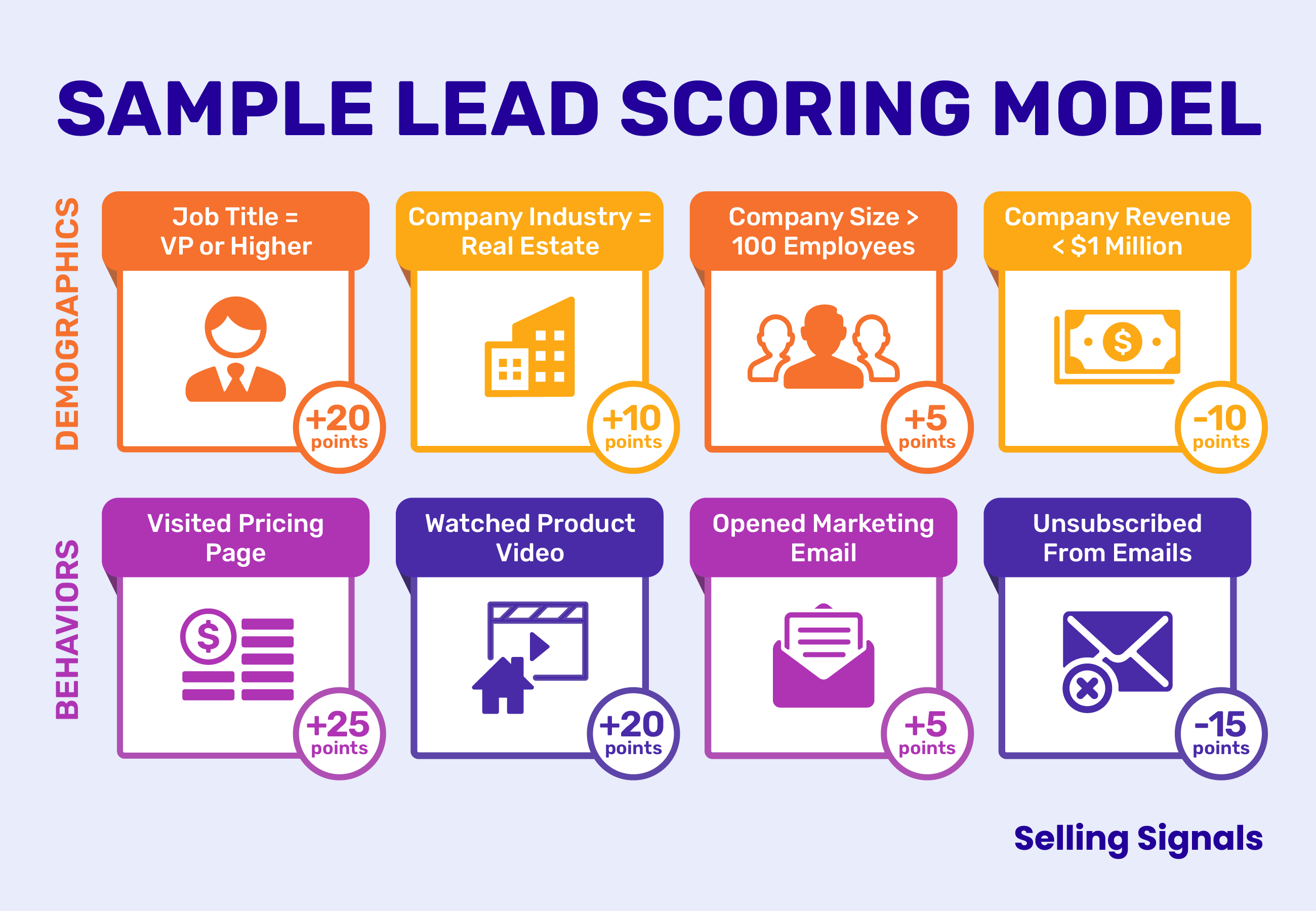
Source: Selling Signals
Since 91% of marketers say lead generation is their number one priority, attracting more leads should be the primary goal for any SaaS company. But not all leads are created equal. AI SaaS tools identify and prioritize leads based on their likelihood to convert.
How to Implement
- Predictive lead scoring: Evaluate leads based on historical data and engagement levels. Use AI SaaS tools to track and assess data to score the lead.
- Chatbots and conversational AI: Implement chatbots to engage visitors in real time, gather lead information, and qualify prospects based on their responses.
Metrics to Measure
- Lead quality: Ensures that all your efforts and resources go toward sales-ready leads.
- Cost per lead (CPL): Every SaaS company should determine its cost tolerance toward leads and each channel it uses to attract them.
- Customer acquisition cost (CAC): Reflects the expenses of turning leads into customers.
Tools to Use
- Salesforce: Offers many sales and marketing tools to identify quality leads.
- Drift: Uses conversational AI and natural language processing to communicate with customers. It also includes sales pipeline software and future sales forecasting tools to attract more inbound leads and ensure they convert.
- Intercom: An omnichannel AI agent for SaaS brands that offers customer assistance and insights with automated workflows to send more proactive messages.
AI-Driven Social Media Marketing
Social Listening and Sentiment Analysis:
AI-powered tools will enable SaaS companies to track social media conversations and analyze the sentiment around their brand. This real-time feedback will help shape marketing strategies, allowing brands to respond proactively to customer sentiment.
- Example: Brandwatch and Sprout Social use AI to analyze social media conversations, providing insights into customer opinions and brand perception.
- Statistics: A Sprout Social report indicates that 68% of customers say they are more likely to buy from brands they follow on social media, highlighting the importance of timely, sentiment-based engagement.
- Resource: Sprout Social on Social Listening
Automated Influencer Matching:
AI will help SaaS brands identify and collaborate with influencers whose audiences align with the brand’s target demographic. This will optimize influencer campaigns and ensure a more efficient ROI.
- Example: Platforms like Influencity use AI to match SaaS companies with relevant influencers based on their audience engagement and content fit.
- Statistics: According to Influencer Marketing Hub, 63% of marketers plan to increase their influencer marketing budgets in 2025.
- Resource: Influencer Marketing Hub
Everyone knows social media is a pivotal part of a marketing strategy. But how have AI tools revolutionized how a brand markets on social media? AI SaaS solutions can gauge public sentiment, analyze your audience’s emotional needs, and identify negative trends. Public sentiment improves audience engagement since this technology provides deeper insights into customer behavior.
How to Implement
- Predictive analytics: Forecasts customer trends and identifies potential risks.
- Sentiment analysis: Monitors social media and online reviews to understand public sentiment so you can refine your messaging accordingly.
- Customer service: Monitor your social media channels and respond to customer concerns.
- Brand reputation: Scout various forums and review websites to discover public opinions about your brand, offering valuable insights into what your consumers enjoy and dislike so you can adapt to their wants and needs.
Metrics to Track
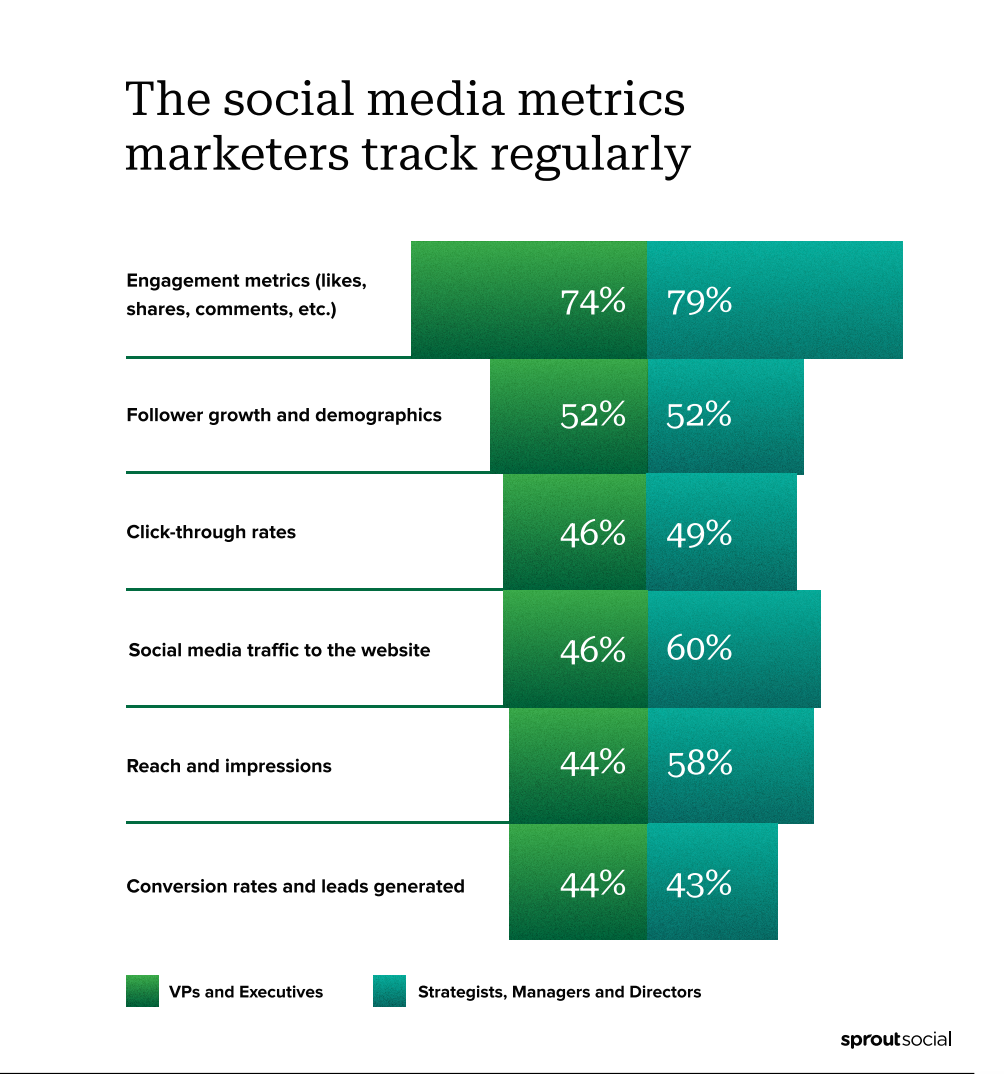
Source: Sprout Social
- Engagement rates: Comments, likes, and shares are all examples of audience engagement. This helps you understand customer intent.
- Brand mentions: Tracking brand mentions on social media, online, and on forums like Reddit is an effective way to gauge brand awareness.
- New followers: Measures the number of new followers you gain on a particular platform over a specific period. It can also be linked to a post or other social media event, such as a livestream.
- Reach: Represents the number of unique users who saw your social media content for the first time.
Tools to Use
- Brandwatch: An all-in-one suite to gauge your audience’s sentiment analysis and public perception.
- Google Analytics 4: Can track essential social media metrics like sessions, users, conversions, and engagements.
- Sprinklr: A social listening tool that collects and monitors your social media data.
- Sprout Social: All-in-one social media platform streamlining content, creatives, and post publishing. It also offers a visual representation of your sentiment analysis.
Optimized Content Marketing
Automated Content Generation:
AI will play a significant role in content creation for SaaS brands. Content tools powered by GPT-4 and other large language models can automatically generate articles, blog posts, whitepapers, and more, making content production scalable without compromising on quality.
- Example: Tools like Jasper and Copy.ai already generate content for social media posts and SEO-optimized blogs. In 2025, these tools will become even more sophisticated, capable of creating content that’s contextual, relevant, and more human-like.
- Statistics: According to Content Marketing Institute, 70% of B2B marketers say that content creation is one of their biggest challenges. AI can streamline this process.
- Resource: Content Marketing Institute
Visual and Video AI Content:
AI tools will allow SaaS brands to quickly generate video content, infographics, and other visual assets. Video marketing is becoming essential, with companies like Synthesia using AI to create realistic avatars and personalized video messages.
- Example: Synthesia generates AI-driven videos that can be personalized for individual customers, creating high-impact content without the need for human actors or expensive production costs.
- Statistics: According to Wyzowl, 86% of businesses use video as a marketing tool, and 93% of marketers believe that video increases user understanding of their products and services.
- Resource: Wyzowl Video Statistics
Subject Line & Content Optimization:
AI will continuously test and optimize email subject lines, content, and design, learning which combinations lead to the highest open and click-through rates. Over time, this will automate the process of finding the most effective messaging.
- Example: Tools like Phrasee use AI to generate subject lines and email content that resonate with the target audience, increasing engagement.
- Statistics: Campaign Monitor states that emails with personalized subject lines are 26% more likely to be opened.
- Resource: Campaign Monitor on Email Personalization
Automated Email Journeys:
AI will automate and optimize email journeys for customers, adjusting content based on user actions (e.g., browsing a particular feature, watching a demo). This will reduce churn and increase customer lifetime value (CLV).
- Example: HubSpot‘s workflows allow SaaS marketers to set up automated email sequences based on specific user behaviors.
- Statistics: Epsilon finds that 80% of customers are more likely to purchase from a brand that offers personalized experiences.
- Resource: HubSpot on Email Automation
How to Implement
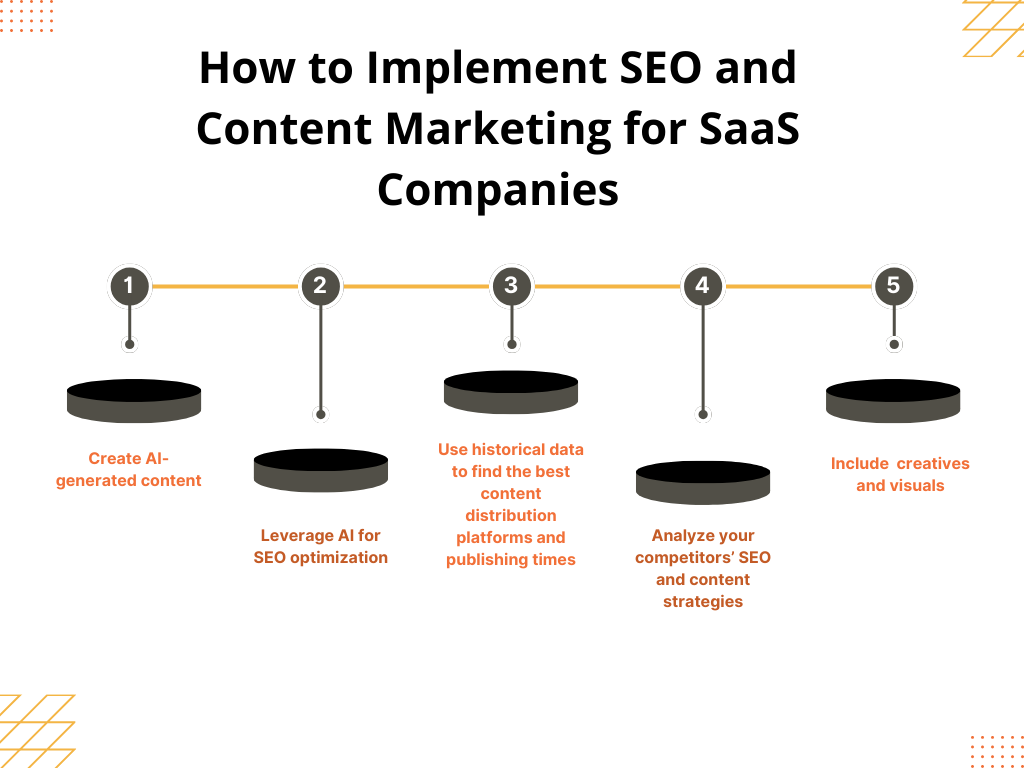
- AI-generated content: Generative AI SaaS solutions can create blog posts, ad copy, and social media content, speeding up the writing process while maintaining quality.
- SEO optimization: Use AI tools to identify high-performing keywords and suggest content improvements to improve search engine rankings.
- Content distribution: Identify the best channels and times to distribute your content for maximum reach.
- Competitor research: Analyze your competitors for valuable information, such as which topics they write about and where they post their content.
- Creatives and visuals: Break up chunks of text with high-quality images, infographics, and videos.
Metrics to Track
- Organic traffic: The number of visitors you receive from unpaid tactics, such as search results.
- Traffic sources: Identifying the different areas where users are finding your website.
- Click-through rates: Percentage of website visitors who clicked on your CTA over a specific period.
Tools to Use
- Jasper: Uses generative AI to create SEO and marketing content.
- Writesonic: Advanced AI SaaS writer that can produce blogs and articles with your branded voice. It also includes marketing tools to improve search engine rankings and increase website traffic.
- Surfer SEO: Optimizes your content with keyword suggestions and writing improvements. It also conducts research and suggests an article outline.
- SEMRush: Includes numerous AI tools to optimize your content and improve your SEO campaign. SEMRush’s most favored tools include Keyword Magic, Topic Research, SEO Content Template, SEO Writing Assistant, and ContentShake AI.
- BuzzSumo: Conducts topic research to build authority in your niche.
Predictive Customer Behavior Modeling
Advanced Behavioral Segmentation:
Traditional segmentation methods will be enhanced by AI, moving beyond basic demographics and incorporating behaviors, psychographics, and historical interactions. This will allow SaaS marketers to tailor marketing efforts for each stage of the customer lifecycle.
- Example: AI can identify which users are most likely to upgrade based on their usage patterns (e.g., those frequently using advanced features).
- Statistics: A Salesforce study showed that 70% of consumers expect companies to understand their needs and expectations, highlighting the importance of advanced segmentation.
- Resource: Salesforce on Behavioral Segmentation
Intent-Based Marketing:
AI will also identify signals that indicate intent, such as a user visiting pricing pages or interacting with specific product features. SaaS companies can create marketing strategies tailored to these signals, focusing on high-intent leads.
- Example: If a user spends time viewing your highest-tier pricing plans, AI could trigger an email or offer a demo, recognizing that the user is considering upgrading.
- Statistics: According to HubSpot, intent data helps improve conversion rates by 30%, showcasing how powerful it is in SaaS marketing.
- Resource: HubSpot on Intent Data
Omnichannel Customer Experience:
AI will help brands provide a consistent, personalized experience across all touchpoints, whether it’s on a website, mobile app, or social media channel. This seamless experience will increase customer satisfaction and conversion rates.
- Example: Salesforce’s Einstein AI helps companies provide tailored experiences across email, mobile, social media, and even offline touchpoints.
- Statistics: Accenture reports that 91% of consumers are more likely to shop with brands that offer relevant offers and recommendations across multiple channels.
- Resource: Salesforce Einstein AI
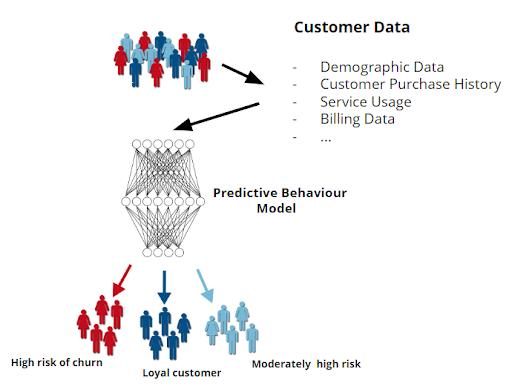
Churn Prediction & Retention:
AI will help SaaS brands predict when a customer is likely to churn and trigger retention actions. This could include personalized discounts, offers, or interventions from customer support teams.
- Example: Zendesk uses AI to predict customer satisfaction and trigger specific actions based on user sentiment.
- Statistics: Gartner states that AI can reduce churn by up to 25% by identifying and addressing customer dissatisfaction in real-time.
- Resource: Zendesk AI Tools
Source: Built In
How to Implement
- Churn prediction: Use AI SaaS to analyze customer usage data to identify churn risks, allowing you to intervene with targeted campaigns or incentives.
- Upselling and cross-selling: AI tools identify opportunities to promote additional services based on customer preferences and behavior patterns.
Metrics to Track
- Revenue: Gauges a company’s financial health. Measures sales in a specific timeframe and can also compare past data and trends to current sales to better forecast revenue.
- Churn rates: The number of leads that don’t become buyers.
- Average transaction value: Determines the average amount each customer spends per transaction.
Tools to Use
- Custify: AI SaaS tool that collects and analyzes customer behavior to predict future consumer behavior.
- Gainsight: Creates scorecards that represent lead quality.
AI-Powered Advertising
AI-Based Attribution Models:
AI will track customer behavior across multiple touchpoints and accurately attribute conversions to specific influencers or affiliate partners.
- Example: Rakuten Marketing uses AI-driven attribution to track affiliate marketing performance and help businesses optimize their partnerships.
- Statistics: According to Influencer Marketing Hub, 63% of marketers plan to increase their influencer marketing budgets, demonstrating the growing importance of AI for tracking ROI.
- Resource: Rakuten Marketing on Attribution
Predictive AI for Campaign ROI:
AI will predict ROI for influencer and affiliate campaigns in real-time, allowing for smarter allocation of resources and better decision-making.
- Example: Platforms like HypeAuditor use AI to predict the potential ROI of influencer campaigns by analyzing past performance and audience quality.
- Statistics: According to Influencer Marketing Hub, the average ROI for influencer marketing campaigns is $5.20 for every dollar spent.
- Resource: Influencer Marketing Hub on ROI
How to Implement
- Programmatic advertising: Automate ad buying, targeting the right audiences at the right time.
- Ad optimization: Analyze performance and suggest optimizations for better results.
- Creative testing: Generate and test ad creatives to determine which resonates most with your audience.
Metrics to Track
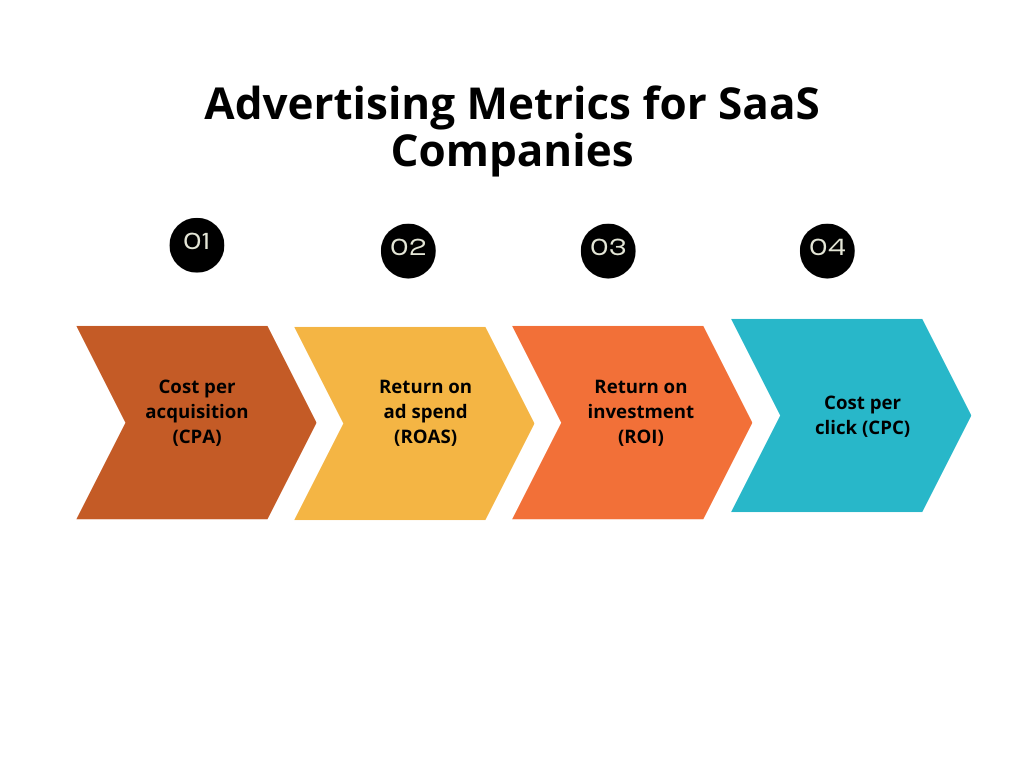
- Cost per acquisition (CPA): The total cost to convert a customer.
- Return on ad spend (ROAS): Compares the cost of your ad campaign to your revenue.
- Return on investment (ROI): The amount of money a brand makes divided by the cost of advertising.
- Cost per click (CPC): How much advertisers paid for an ad, based on the number of clicks it received.
Tools to Use
- Adzooma: Generates performance reports and recommendations to optimize PPC campaigns.
- The Trade Desk: A predictive engine that offers real-time ad recommendations and optimizes your ads at every sales funnel stage.
- Google Ads: Google offers AI solutions for finding new leads through search ads. Campaign insights ensure your business achieves growth and recommend additional actions.
- Persado: Personalizes your ad campaign with generative AI and machine learning, producing hyper-focused content every time.
AI Ethics & Privacy in Marketing
Ethical AI Marketing:
SaaS brands will prioritize transparency, fairness, and accountability in their use of AI, ensuring that data collection and marketing practices align with privacy standards such as GDPR and CCPA.
- Example: SaaS platforms like BigCommerce ensure that their use of AI complies with privacy regulations while delivering personalized experiences.
- Statistics: PwC reports that 79% of consumers are concerned about the ethical implications of AI, making transparency a key factor in building trust.
- Resource: PwC on AI Ethics
Privacy-First Marketing Strategies:
With privacy regulations becoming more stringent, AI will help SaaS brands deliver personalized experiences while respecting user privacy, ensuring data is anonymized and secure.
- Example: Tools like OneTrust enable companies to manage consent and ensure they remain compliant with data protection regulations while using AI.
- Statistics: A Cisco report shows that 80% of customers are more likely to trust a brand that prioritizes their privacy and data security.
- Resource: OneTrust on Privacy
Use AI SaaS Marketing for Success
In 2025, Artificial Intelligence (AI) is no longer just a buzzword—it’s an integral part of SaaS marketing strategies. The rise of AI technologies has transformed the way SaaS businesses engage with customers, optimize marketing efforts, and scale their operations. Whether you are a startup or an established enterprise, using AI-powered tools can help you stay ahead of the competition, maximize customer satisfaction, and drive sustained growth.
But how can SaaS businesses harness the power of AI marketing? And why does it matter? In this chapter, we will explore the key ways AI can be used to power SaaS marketing strategies, the benefits it offers, and actionable steps for implementing AI-driven marketing solutions.
Why AI Marketing Matters for SaaS Success
AI marketing is revolutionizing SaaS by offering new ways to automate complex tasks, improve customer experiences, and make data-driven decisions at scale. The success of your SaaS business depends on your ability to deliver personalized, seamless experiences to your customers, and AI plays a critical role in this journey.
Key Reasons AI Marketing is Essential for SaaS in 2025:
- Improved Personalization: AI can analyze customer behavior and segment audiences based on various factors (e.g., behavior, location, past interactions) to deliver hyper-personalized content and offers that resonate with each user.
- Scalability: AI tools automate repetitive tasks such as email campaigns, lead nurturing, and data analysis, allowing SaaS businesses to scale without needing a proportional increase in resources.
- Predictive Analytics: AI can predict customer behavior, helping businesses forecast sales, identify at-risk customers, and optimize marketing campaigns before the need arises.
- Enhanced Customer Retention: By using AI to analyze patterns, businesses can proactively identify churn signals and take action to retain customers through targeted campaigns, special offers, or personalized outreach.
- Increased Conversion Rates: AI-driven lead scoring and segmentation allow businesses to prioritize high-potential leads and direct marketing efforts toward them, increasing the likelihood of conversions.
How AI Can Revolutionize SaaS Marketing
AI’s role in marketing is multifaceted. Here are the primary ways AI is transforming SaaS marketing:
1. Predictive Analytics for Smarter Decision-Making
What It Is: Predictive analytics uses machine learning algorithms to analyze historical data and forecast future outcomes. In SaaS marketing, this can be applied to predict churn, customer lifetime value (CLV), lead conversion potential, and more.
Why It Matters: By leveraging predictive analytics, SaaS companies can make data-driven decisions that improve customer targeting, campaign timing, and content personalization. This leads to more efficient marketing spend and better overall ROI.
Example: If AI identifies that users who engage with a particular feature early in their trial are more likely to convert to paid customers, you can create automated workflows that push content, tutorials, or incentives to those users at the right moment in their journey.
2. AI-Powered Personalization and Dynamic Content
What It Is: AI tools analyze user data to dynamically personalize content, product recommendations, and messaging based on the customer’s previous interactions and preferences.
Why It Matters: Personalized experiences drive higher engagement, conversion, and retention rates. AI can adapt marketing campaigns in real time, ensuring that customers receive content tailored specifically to their needs and interests.
Example: SaaS platforms can leverage AI to recommend specific features or services based on the customer’s past activity, enhancing the likelihood of feature adoption or upselling. Personalized emails or web content can speak directly to the customer’s needs.
3. AI-Driven Customer Segmentation
What It Is: AI automates the process of segmenting your customer base into smaller groups based on a variety of factors such as behavior, demographics, purchase history, and engagement levels.
Why It Matters: By segmenting your audience more precisely, you can create targeted marketing campaigns that speak to each customer segment’s unique needs and pain points. This ensures higher engagement and improved customer satisfaction.
Example: A SaaS company might use AI to segment users into categories such as “high engagement,” “at-risk,” and “new users,” allowing them to send tailored messages or promotions based on where the customer is in their journey.
4. Automating Lead Scoring and Nurturing
What It Is: Lead scoring is the process of ranking prospects based on their likelihood to become paying customers. AI-driven lead scoring algorithms analyze customer data to predict the probability of conversion.
Why It Matters: AI-powered lead scoring enables SaaS businesses to focus marketing and sales efforts on leads with the highest potential, ensuring that resources are used efficiently.
Example: An AI system can score leads based on factors such as website interactions, email opens, demo requests, and social media engagement. Leads with a high score can automatically be sent to the sales team for further action, while lower-scoring leads can be nurtured through automated emails.
5. Chatbots and Conversational AI for Real-Time Engagement
What It Is: AI-powered chatbots and virtual assistants engage visitors in real time, answering their questions, guiding them through product features, and even collecting contact information or feedback.
Why It Matters: Chatbots help provide immediate support, reducing friction in the customer journey. They can qualify leads, handle FAQs, and book demos, improving customer satisfaction while saving time for human agents.
Example: A SaaS company can use a chatbot to engage free trial users, offering tips, product demos, and answering questions in real time, which improves the chances of conversion to a paid plan.
The Benefits of AI Marketing for SaaS Businesses
1. Improved Efficiency and Cost-Effectiveness
AI tools handle repetitive, time-consuming tasks like email campaigns, social media posting, and lead nurturing, freeing up marketing teams to focus on strategic initiatives. Additionally, by automating these processes, SaaS companies can reduce labor costs and optimize marketing spend.
2. Better Customer Insights
AI provides deeper insights into customer behavior, preferences, and pain points. These insights can be used to create more effective marketing campaigns, improve product offerings, and enhance the customer experience.
3. Enhanced Customer Journey
AI allows businesses to create a more personalized and seamless customer journey. From the first point of contact to post-purchase support, AI can help ensure that every touchpoint delivers value and drives engagement.
4. Data-Driven Decision Making
AI marketing tools rely on data and predictive models, enabling marketers to make informed decisions that are grounded in facts, not guesses. This leads to better-targeted campaigns, higher conversion rates, and optimized customer retention efforts.
Actionable Steps to Implement AI SaaS Marketing
Step 1: Identify Your Marketing Goals
Before implementing AI tools, outline clear marketing goals such as increasing conversions, improving customer retention, or enhancing product engagement. These goals will guide your selection of AI-powered solutions.
Step 2: Choose the Right AI Tools
Select AI tools that align with your business needs. Consider platforms with strong AI capabilities, such as predictive analytics, dynamic content personalization, lead scoring, and automation. Look for tools that integrate well with your existing marketing stack.
Step 3: Start Small and Scale Gradually
Begin with a single AI-powered marketing tool or feature (such as an AI-powered email campaign or chatbot) to test its effectiveness. Measure performance and scale up once you see positive results.
Step 4: Train Your Team
While AI tools are designed to be intuitive, it’s essential to train your marketing team on how to leverage these tools effectively. Provide adequate training on AI-driven features and best practices to ensure a smooth implementation.
Step 5: Monitor, Optimize, and Iterate
Regularly monitor the performance of your AI-driven campaigns using data and analytics. Use this information to optimize your campaigns, refine your lead nurturing strategies, and improve personalization.
Step 6: Continuously Innovate
The landscape of AI marketing is evolving rapidly. Stay ahead of the competition by keeping an eye on emerging trends and innovations in AI technology, and continuously innovate to optimize your SaaS marketing efforts.
Conclusion: AI Marketing is the Future of SaaS Success
AI marketing is not just a passing trend—it’s the future of SaaS marketing. By embracing AI-powered tools and strategies, SaaS businesses can enhance efficiency, optimize customer journeys, and drive growth at scale. The ability to personalize experiences, predict customer behaviors, and automate complex tasks will allow businesses to engage with customers in ways that were previously impossible.
The SaaS industry is evolving rapidly, and those who leverage AI marketing will lead the charge. Implementing AI today can help you achieve marketing success tomorrow, ensuring your SaaS business thrives in the competitive landscape of 2025 and beyond.