AI TOOLS 2024.
The startup industry is frequently associated with rigor, uncertainty, unlearning, hustle, and an abundance of long, long hours. Entrepreneur and investor Paul Graham listed the attributes that Y Combinator looks for in its founders in an essay, noting that among other things, perseverance, adaptability, and inventiveness were essential.
Many founders believe that these entrepreneurial traits come naturally to them, frequently as a result of growing up in environments that unavoidably promote this culture. For those whose families are not aware of this unorthodox path to success, however, this leap of faith can be difficult.
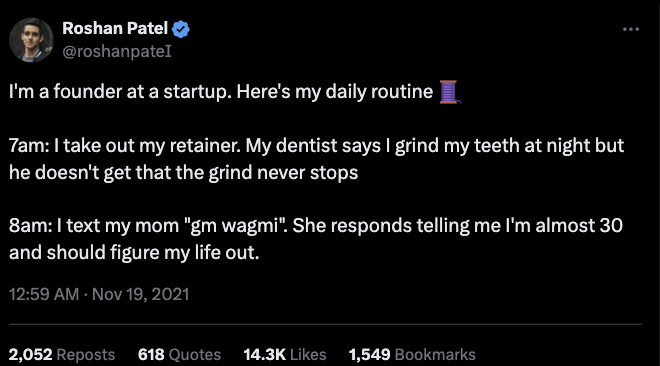
The CEO and founder of Arrow Payments, Roshan Patel, revealed on X that although he was making progress in his fundraising efforts, his parents begged him to keep his backup plans, such as medication, available. In another thread, he also shared his morning routine, and though it was an ironic take on a founder’s life, it struck a chord among many.

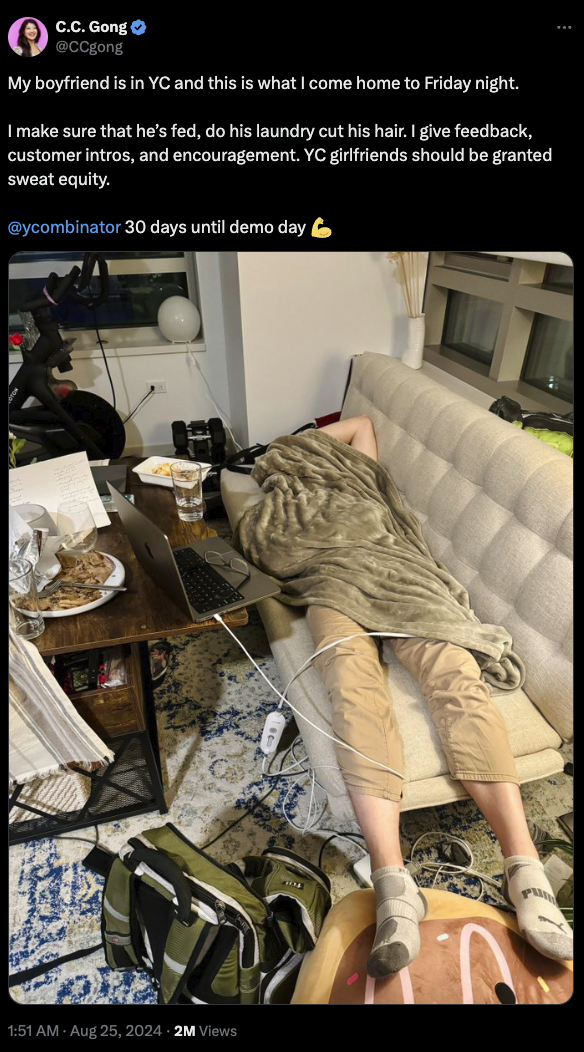
In a viral post on X, CC Gong, an AI investor, shared a tongue-in-cheek picture of her boyfriend swamped with work on a Friday night wearing mismatched socks.
She later followed it up with another post featuring him all cleaned up. “Hair cut, socks matched, but you should still invest, and he’s launched,” she titled it. In the weeks leading up to Y Combinator’s famous Demo Day, founders are toiling long hours, and embroiled in the race to get the perfect pitch for their final presentation in front of scores of investors.

Not just the bay area and YC, Bengaluru, the Silicon Valley of India, has always been the hub for tech startups. Step into any cafe or a bar, and you are likely to overhear either a startup founder pitching his idea to a potential investor or people discussing their products with each other.
Someone correctly pointed out: If LinkedIn was a city, it would definitely be Bengaluru. The city is filled with startup founders pitching ideas to each other and doing all the work all by themselves.
Marcos Rico Peng, another CEO of a YC backed AI startup, shared a day in his life as a founder on YouTube. “Some things never change. This is my morning routine, which starts with Gym. Even though I am taking a break, I want to stay in shape.” A former athlete, Peng prioritises fitness, and tries to get in at least two sessions of work outs in his day, despite a tight schedule of work.
Earlier this week, Karthik Sridharan, founder of Flexiple, took to X to share how in quintessential Bangalore fashion, an intern quit his job because his AI startup venture got funded. The uncertainty and surprise around a founder’s life is also a growing trend, especially when seeking investments that could completely change the course of their life.

The passion to build something bigger and better fuels this obsession for most founders. Aadit Palicha, the 22 year old founder of Zepto – India’s leading quick commerce app – was recently named on the 2024 Hurun India Rich List.
In a recent interview, commenting on his work-life balance, he said “I am married to Zepto. Will place a bed in our new office in Bengaluru.” Palicha, along with his co-founder Kaivalya Vohra, dropped out of Stanford University to build their dream company, Zepto.
On work-life balance, a lot of founders concur that this line is non-existent, at least not in the early days – and that it is an all consuming passion.
Lauren Rothwell, co-founder of a BlazeAI, talks about how the reality of being a founder is both better or worse than the general public would imagine, and there is still hope and promise in pursuing this gruelling dream.
Yet, the story of failure is not uncommon in the startup world. In an article, Tom Eisenmann, a Harvard professor, talked about how most startups don’t succeed, and more than two thirds of them don’t even deliver a positive response to the investors.

“Startups are so hard. “As a first-time founder, there will be phases, sometimes lasting years, during which you will commit every rookie error known to man and constantly feel like you are being hit in the stomach,” stated Katelyn, the CEO and founder of Eligible.
She also said that entrepreneurs of startups sometimes make the mistake of hiring the wrong people, bringing on the wrong investors, or becoming sidetracked by their primary customer focus and going to market strategies. “However, if you can just persevere through all of the setbacks. The value that a successful business creates is astounding, provided you can grow and learn from them. Almost worth the effort. perhaps more valuable.”
Building a startup has never been more advantageous than it is right now. With increasing fund sizes, growing number of M&As, and the support from the government for deep tech, it is now time for every techie to put on the ‘founder mode’ hat and start building.